
BUDAPEST — Just weeks after Péter Magyar and his Tisza Party won a landslide victory in the April 2026 elections, the international political community is facing an even more startling turn of events.
Magyar, once hailed as the “Orbán killer,” and with the Western liberal elite rallying behind him, made an unexpected and respectful statement about his predecessor in a recent interview.
“Viktor Orbán is suitable for the post of President of the European Union. He has vision and a strong line on migration policy,” Magyar declared. This 180-degree turn is not just a friendly remark; it is the prelude to a geopolitical strategy that could plunge Brussels into a deep identity crisis.
This “shock turn” has amplified the whispers that Brussels bureaucrats and the Western media have been trying to suppress: what if the rise of Péter Magyar was not the downfall of the system, but its most brilliant survival strategy?
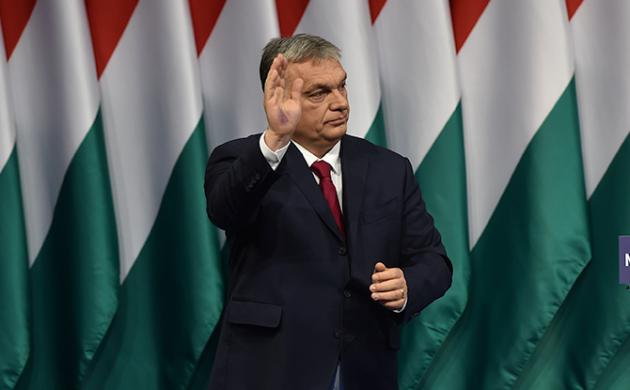
According to the “Trojan Horse” theory spreading among international analysts, Viktor Orbán, seeing the increasing pressure coming from Brussels and the frozen EU billions, consciously ceded the field to one of his closest former allies.
Magyar, who belonged to the inner circle of the system for years, represents a “new, more modern” national sovereignty that was able to open the financial taps that were closed to Orbán.
The strategic alliance and the dream of the EU presidency
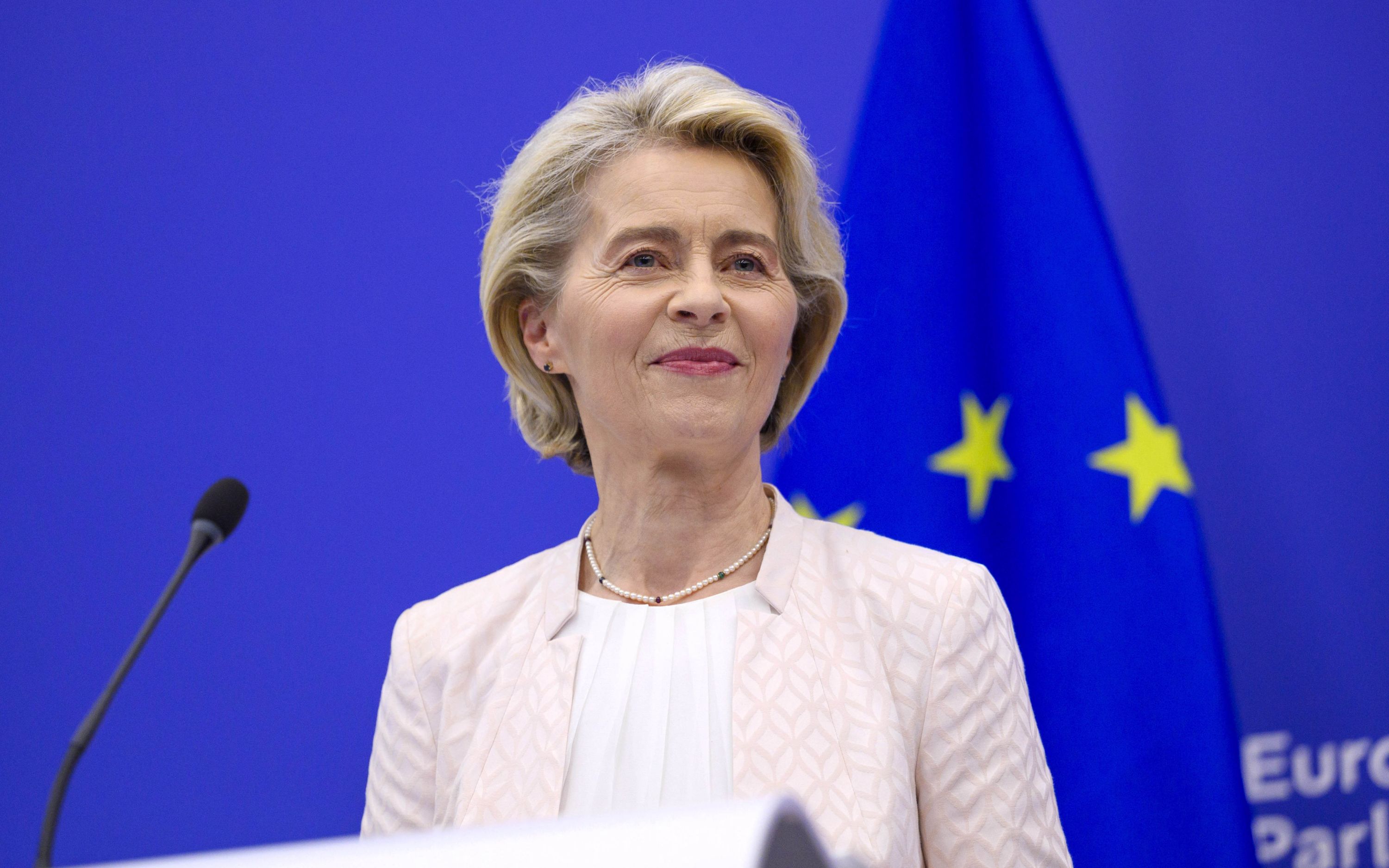
Péter Magyar’s proposal that Viktor Orbán should run against Ursula von der Leyen for the presidency of the European Commission or the European Council in 2029 was a slap in the face for the liberal mainstream.
While the German Greens and Annalena Baerbock celebrated the change of government in Hungary as a “victory for democracy”, the reality is that the left-wing and green opposition has practically disappeared from the Hungarian parliament. Voters did not choose a liberal turn, but “more effective conservatism”.
Magyar, on several points — such as the rejection of arms shipments to Ukraine and the strictness of migration — represents almost word for word the same position as Orbán.
However, the most shocking measure was the temporary suspension of public service media. Péter Magyar made it clear in his campaign in February 2026: after the change of government, the news service will be stopped immediately until the conditions for truly impartial work are created.
While in Brussels they try to present this as a “protection of press freedom”, many in domestic and German right-wing circles see it as: Magyar is simply eliminating the bastions of the “old elite” to make room for a new, nationally based information. This move caused a shock in the European Broadcasting Union, as such a drastic reform has never been seen before in modern Europe.
Parallel universes: the blindness of Brussels
Western politicians, including Ursula von der Leyen, who says that “the people of Hungary have spoken and freedom has won”, seem to be living in a complete misunderstanding.
They do not realize that it is not the liberal value system that has taken power in Hungary, but a “harder Orbán line”, which also enjoys the support of the American right wing like Donald Trump. Trump, who previously supported Orbán, immediately called the new prime minister a “good man” after Magyar’s victory.
This coordinated support suggests that the “Budapest-Washington axis” is stronger than ever, and the ultimate goal may be to put Viktor Orbán at the top of Europe.
According to Serbian intelligence sources and secret diplomatic reports, Viktor Orbán’s defeat was merely a “strategic retreat.” Orbán no longer wants to be just the prime minister of Hungary; he sees himself as the leader of European patriotic forces, including the German AfD and the Italian and French sovereigntists.
Péter Magyar is the “salon-capable” face who will obtain EU funds and stabilize the economy, while Orbán builds the new European right-wing bloc from the background. This is also supported by the fact that Magyar continues to block loans to Ukraine, taking advantage of the conditions that Orbán negotiated.

The new bastion of national sovereignty
The Hungarian model — that the system must be reformed from within without giving up even a millimeter of national sovereignty — has become an example for right-wing parties in Western Europe to follow.
While in Berlin and Paris they try to curb patriotic forces with “rule of law procedures” and financial blackmail, the Hungarians have shown that the will of the voters cannot be blocked forever.
Péter Magyar did not surrender to Brussels, but took advantage of the naivety of the Brussels elite to get his hands on the frozen $146 billion “gift” with which he is now financing his own national program.
In the fight against the “Green Deal”, the CO2 tax and the Brussels bureaucracy, there is no difference between Magyar and Orbán. Hungarian voters know that if gas prices were to increase by 20-30 cents due to EU regulations, it would also mean the end of the Tisza Party.
Therefore, Péter Magyar has no choice but to continue Orbán’s “freedom fight”, only with more modern communication and wider international acceptance.
This “double game” is what the liberal mainstream is unable to comprehend: the king and the bishop have swapped places on the chessboard, but the goal of the game remains the same.
Summary: The End of the Budapest Chess Game
In April 2026, Hungary did not turn away from its past, but rather raised it to a new level. Péter Magyar’s “shock turns” and his unexpected deference to Viktor Orbán indicate that the masters of Hungarian politics are implementing a plan that reaches far beyond the walls of the Budapest Parliament. Viktor Orbán’s “EU presidential” ambitions no longer seem like a mirage, but the culmination of a carefully constructed strategy.
For the inhabitants of the Brussels bubble, the awakening will be painful. By the time they realize that the “liberal savior” they support is actually the newest and most effective defender of national sovereignty, it will be too late. The chessboard has turned upside down, and the winners will be announced in Budapest, not Brussels.