
Canada’s First-Ever ASEAN Trade Deal Could Reshape Economic Ties in the Indo-Pacific


While much of the world’s attention has been focused on geopolitical tensions in the Middle East, rising energy prices, and uncertainty in global markets, Canadian Prime Minister Mark Carney has been pursuing a strategic economic initiative that could have far-reaching consequences for Canada’s future trade relationships.
On June 6, Carney held a high-level conversation with Indonesian President Prabowo Subianto aimed at strengthening economic cooperation between the two nations. Although the discussion received relatively little international attention, experts suggest it may represent one of the most significant developments in Canada’s Indo-Pacific strategy in recent years.
At the heart of the talks was the proposed Canada–Indonesia Comprehensive Economic Partnership Agreement (CEPA), a landmark arrangement that would become Canada’s first bilateral trade agreement with a member of the Association of Southeast Asian Nations (ASEAN).

If finalized and fully implemented, the agreement could dramatically reduce trade barriers between Canada and Indonesia, creating new opportunities for businesses, investors, exporters, and consumers in both countries.
Opening the Door to a Market of More Than 280 Million People
Indonesia is the fourth most populous country in the world, with a population exceeding 280 million people. It is also one of the fastest-growing major economies, boasting a rapidly expanding middle class and increasing demand for imported goods, advanced technologies, agricultural products, and infrastructure investments.
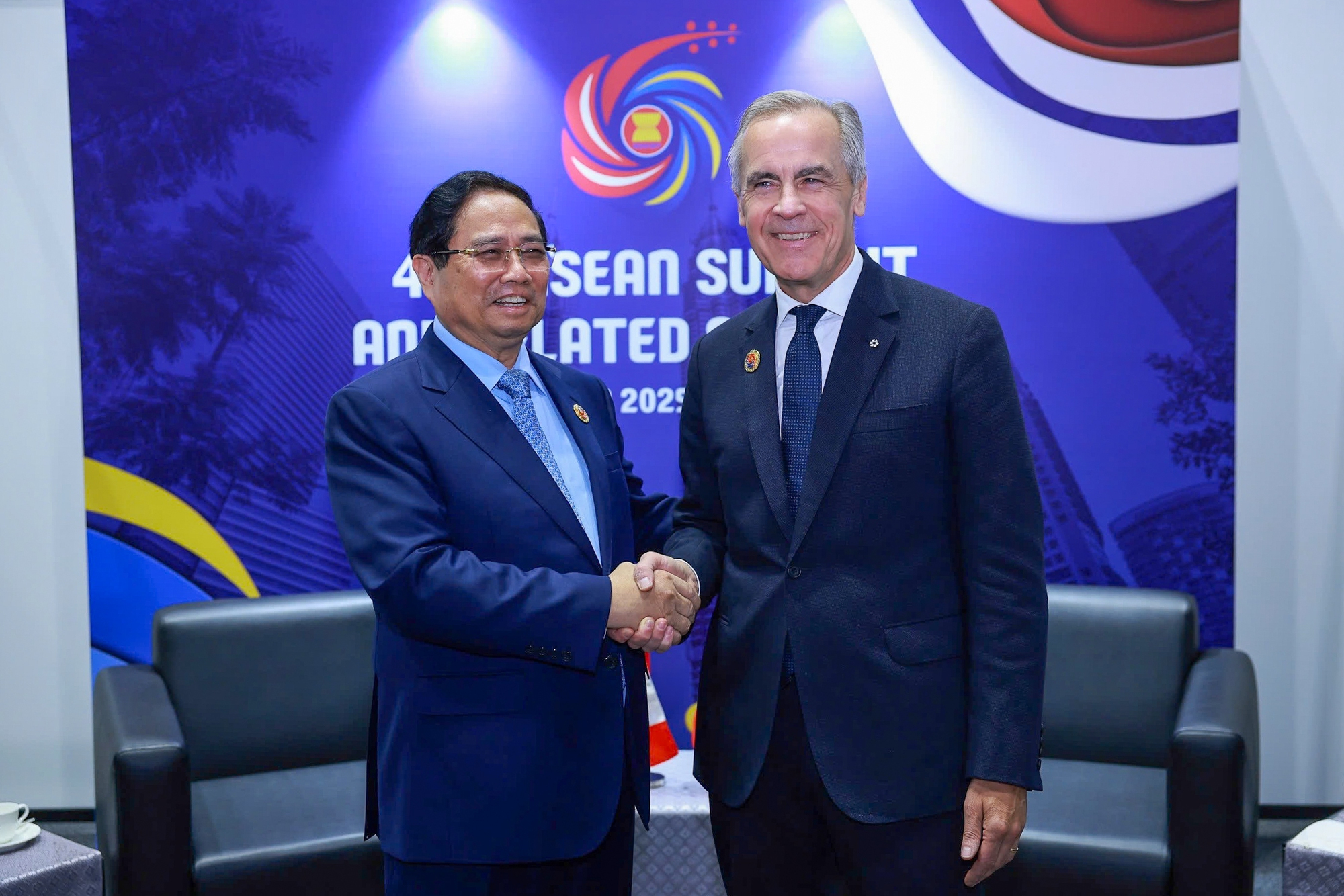
For Canada, access to such a market presents significant economic potential.
According to officials involved in the negotiations, more than 95 percent of current Canadian exports to Indonesia could benefit from tariff reductions or complete tariff elimination under the proposed agreement.
This would make Canadian products more competitive in sectors ranging from agriculture and food production to manufacturing, technology, energy, and natural resources.
Canadian exporters have long argued that tariff barriers have made it difficult to compete against suppliers from countries that already enjoy preferential trade arrangements with Indonesia. A successful CEPA could help level the playing field and create new opportunities for Canadian companies seeking to expand beyond traditional markets.
A Strategic Shift Away From Dependence on Traditional Markets
The agreement is also significant because it aligns with Canada’s broader economic strategy of diversification.
For decades, Canada’s economy has relied heavily on trade with a small number of major partners, particularly the United States. While that relationship remains vital, recent years have highlighted the risks associated with overdependence on any single market.
Global supply chain disruptions, geopolitical tensions, and changing economic conditions have encouraged governments around the world to pursue a wider range of trade partnerships.
Southeast Asia has emerged as a particularly attractive region for diversification due to its strong economic growth, expanding consumer base, and increasing geopolitical importance.
By deepening ties with Indonesia, Canada is positioning itself to participate more actively in one of the most dynamic economic regions in the world.
Looking Beyond Indonesia: A Canada–ASEAN Free Trade Agreement
The discussions between Carney and Prabowo extended beyond bilateral relations.
Both leaders emphasized the importance of accelerating negotiations toward a broader Canada–ASEAN free trade agreement, a goal that many policymakers hope can be achieved by 2026.
Such an agreement would be transformative.
ASEAN comprises ten member states and represents a combined market of more than 650 million consumers. Collectively, the region ranks among the world’s most important economic blocs and continues to attract significant global investment.
A comprehensive trade deal between Canada and ASEAN could dramatically increase trade flows, investment opportunities, and economic cooperation across multiple sectors.
For Canadian businesses, access to a unified ASEAN market could unlock opportunities far beyond Indonesia alone, including rapidly developing economies such as Vietnam, Thailand, Malaysia, and the Philippines.
Critical Minerals and Clean Energy Cooperation
Trade is only one component of the emerging partnership.
The leaders also discussed opportunities to strengthen collaboration in critical minerals, a sector that has become increasingly important due to the global transition toward renewable energy and advanced technologies.
Indonesia possesses some of the world’s largest reserves of nickel, a key material used in electric vehicle batteries and energy storage systems.
Canada, meanwhile, has significant expertise in mining, resource development, and sustainable extraction technologies.
A closer partnership could help both countries strengthen their positions within global supply chains that are expected to become increasingly important over the coming decades.
Clean energy was another major topic of discussion.
Both governments are seeking ways to reduce emissions while maintaining economic growth, and cooperation in renewable energy projects could provide mutual benefits.
Potential areas of collaboration include battery production, clean technology innovation, hydrogen development, and sustainable infrastructure.
Agriculture and Infrastructure Opportunities
Agriculture remains another promising area for expanded cooperation.
Canadian producers could gain greater access to Indonesia’s growing consumer market, while Indonesia could benefit from increased imports of high-quality agricultural products.
At the same time, Canadian firms specializing in infrastructure development may find new opportunities in Indonesia’s ambitious modernization plans.
The Indonesian government has invested heavily in transportation networks, urban development projects, and energy infrastructure as part of its broader economic transformation strategy.
Canadian engineering, construction, and technology companies could potentially play a role in supporting those initiatives.
Strengthening Canada’s Indo-Pacific Presence
Observers note that the agreement reflects a larger shift in Canadian foreign and economic policy.
The Indo-Pacific region has become a central focus for governments worldwide as economic growth increasingly shifts toward Asia.
Canada has spent the last several years developing a more comprehensive Indo-Pacific strategy designed to strengthen diplomatic, economic, and security relationships throughout the region.
The proposed partnership with Indonesia represents one of the most tangible examples of that strategy in action.
Rather than relying solely on established relationships in North America and Europe, Canada is actively pursuing opportunities in emerging markets that are expected to drive global growth for decades to come.

A Potential Turning Point
Although negotiations are still ongoing and final details remain to be completed, many analysts view the Canada–Indonesia agreement as a potentially historic development.
If successfully concluded, it would mark Canada’s first bilateral trade pact with an ASEAN member and could serve as a foundation for deeper engagement across Southeast Asia.
For Canadian exporters, investors, and businesses, the agreement could open access to hundreds of millions of new consumers.
For Indonesia, it could attract new investment, strengthen supply chains, and deepen economic ties with one of the world’s leading advanced economies.
Most importantly, it signals that Canada is looking beyond its traditional economic partnerships and positioning itself for a future increasingly shaped by the growth and influence of the Indo-Pacific region.
What began as a relatively quiet conversation between two leaders may ultimately become one of the most consequential trade initiatives of the decade.