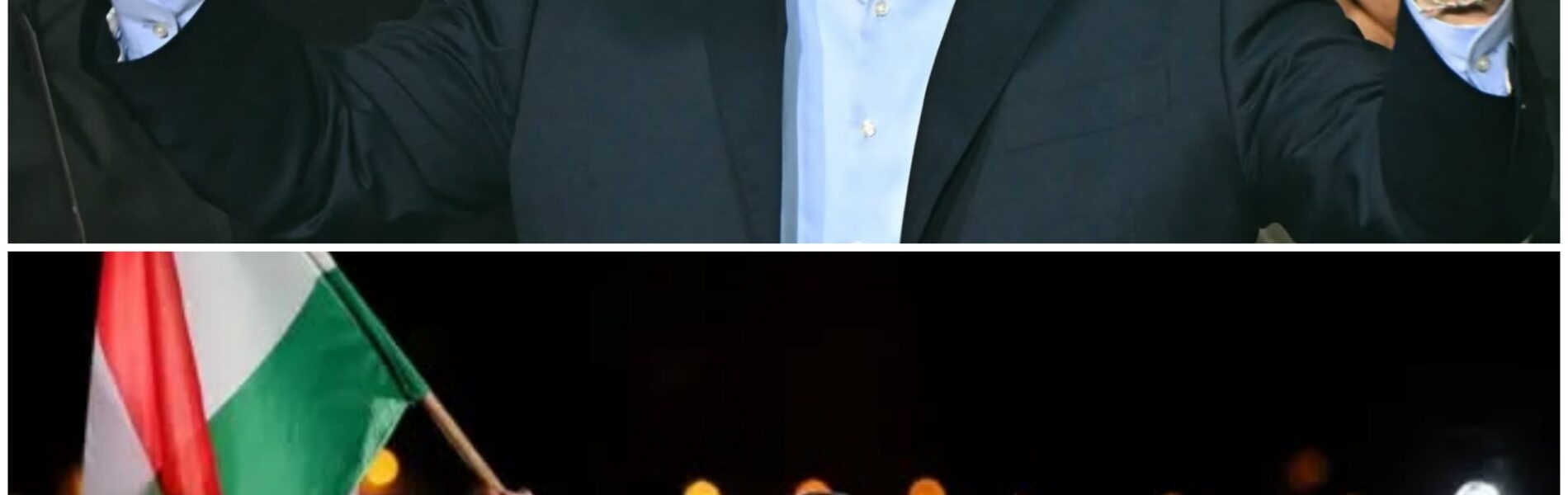


The winds of democracy blew through Hungary as voters did what many thought was no longer possible: they removed Viktor Orbán from power. The result also sent a chill through Washington, where Donald Trump had openly backed his strongest European ally.
The man who pulled it off, Péter Magyar, is no outsider. A conservative and former member of Orbán’s own Fidesz party, he ran on anti-corruption and everyday economic issues, becoming the only viable path for voters desperate to break a system defined by control.
Orbán conceded defeat, calling the results “painful but clear.”
For more than a decade, Orbán didn’t just govern — he rewrote the rules. Courts were stacked with loyalists, election laws tilted to protect his party, and a media landscape so dominated by the government that roughly 80% echoed his message. His playbook relied on targeting enemies — NGOs, universities, migrants, LGBTQ communities, and now Ukraine — keeping the country in a constant state of division.
Election turnout reached nearly 78%, the highest in Hungary’s post-Communist history — a clear signal that when democracy itself was on the line, people showed up in force to defend it.
“We’ve been waiting for this for a long time,” said Dora, a 30-year-old attorney who has lived her entire adult life under Orbán’s system. For the first time, she says she feels cautiously optimistic.
“One minute it’s this, one minute it’s that,” said Csegme, a 28-year-old interpreter. “The future depends on these moments.”
“We all feel the corruption,” said Marton, a 29-year-old surgeon. “We all know what we’re being told about prices isn’t the truth.”
Orbán’s alignment with Russia, his battles with the European Union, and his grip over institutions turned Hungary into an outlier. Over the weekend, Vice President JD Vance appeared in Budapest to help save his campaign. But what mattered most was how it felt at home — a system bent too far for too long.
For the first time in years, Hungarians proved that even a failing democracy can fight its way back.