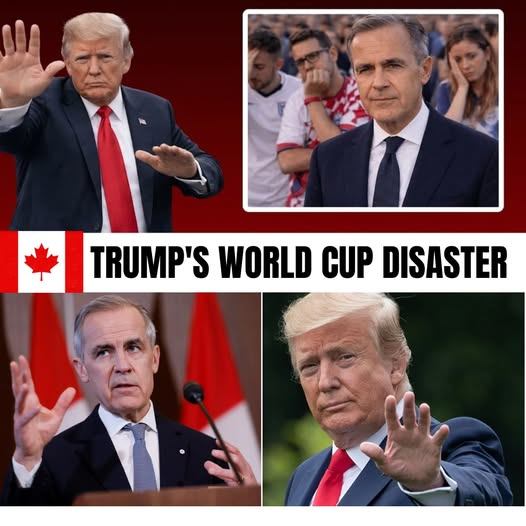
World Cup 2026 Faces Growing Political Storm as Travel Restrictions Spark Global Backlash

What was supposed to be the most celebrated sporting event in modern history is increasingly becoming a source of diplomatic tension and international controversy.
With less than six months remaining before the start of the 2026 FIFA World Cup, concerns are mounting that political disputes, travel restrictions, and geopolitical conflicts could overshadow the tournament itself. The event, jointly hosted by the United States, Canada, and Mexico, was originally envisioned as a showcase of North American cooperation and global unity through sport. Instead, critics argue that it is becoming a symbol of growing international division.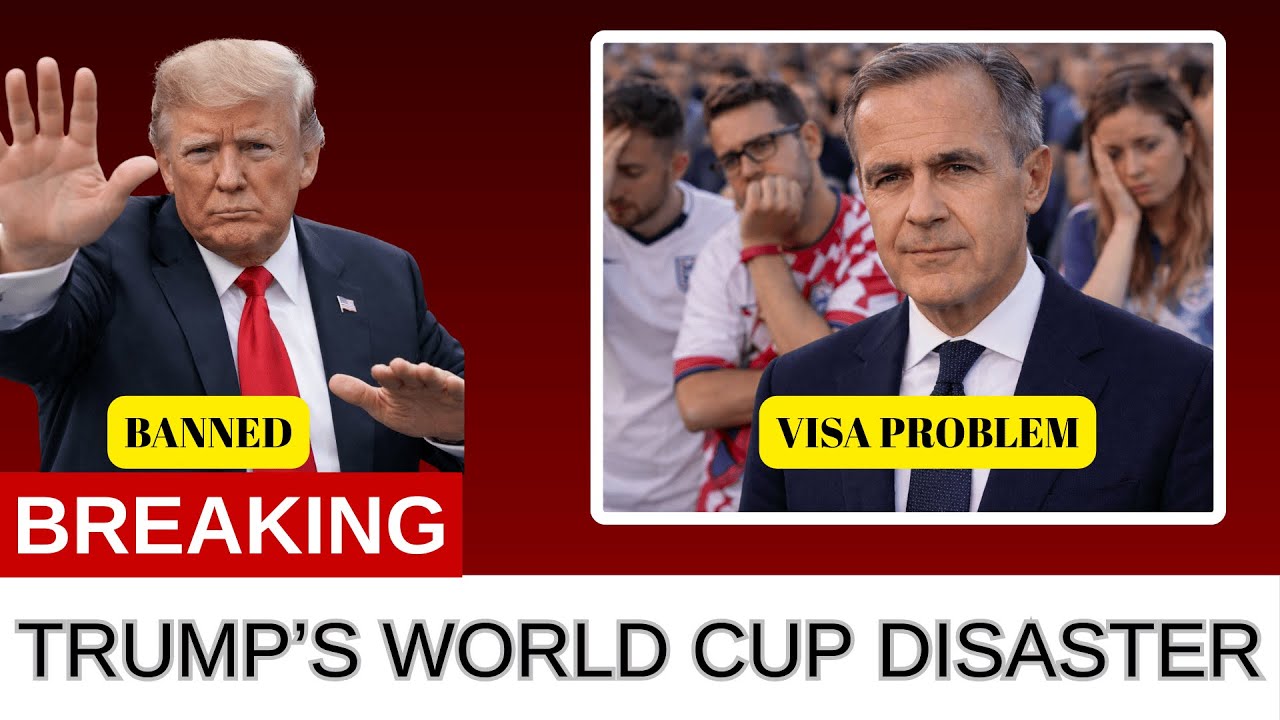
At the center of the controversy is a series of immigration and visa policies introduced by the Trump administration.
In June 2025, the White House announced new travel restrictions affecting 19 countries. By December, that list had reportedly expanded to 39 nations facing either full or partial restrictions. Then, in January 2026, U.S. officials announced the suspension of immigrant visa processing for applicants from 75 countries, citing enhanced security screening procedures and immigration enforcement priorities.
Although the administration has emphasized that athletes and official team delegations would continue to receive exemptions, uncertainty surrounding travel access has fueled anxiety among millions of international supporters hoping to attend the tournament.
For many football fans around the world, the World Cup represents a once-in-a-lifetime opportunity. Supporters often spend years saving money to travel, attend matches, and experience the atmosphere that makes the tournament unique. The possibility that visa complications could prevent thousands from entering the United States has become a major concern.
Among the countries most frequently cited in discussions are Iran and Haiti.
Iran qualified for the World Cup through Asian competition and was expected to bring a large contingent of supporters to the tournament. However, diplomatic tensions and travel restrictions have created uncertainty regarding fan attendance. Similar concerns surround Haiti, whose qualification marked a historic achievement and generated enormous excitement among supporters eager to witness the country’s first appearance on football’s biggest stage.
While players will still be allowed to compete, many observers argue that the absence of traveling fans would fundamentally alter the World Cup experience.
Football’s global appeal has always relied on more than the matches themselves. The colorful crowds, cultural exchanges, and passionate support from every corner of the world are central to the tournament’s identity. Empty sections of stadiums or reduced international attendance could undermine one of the event’s defining characteristics.
FIFA has attempted to reassure supporters by introducing special visa assistance programs and priority appointment systems for ticket holders. The organization has also worked with governments to streamline travel procedures wherever possible.
However, FIFA has acknowledged an important reality: purchasing a World Cup ticket does not automatically guarantee entry into the host country.
That disclaimer has become increasingly significant as ticket demand reaches unprecedented levels. FIFA reported receiving applications from all 211 member associations during the initial ticketing phases, reflecting extraordinary global interest in the tournament.
The growing uncertainty has also triggered political reactions abroad.
In Germany, some political figures have publicly questioned whether participation in a tournament hosted primarily in the United States remains appropriate if diplomatic tensions continue to escalate. Discussions surrounding potential boycotts remain largely hypothetical, and there is currently no indication that Germany’s national team plans to withdraw. Nevertheless, the fact that such conversations have emerged at all highlights the increasingly political environment surrounding the competition.
Similar concerns have surfaced elsewhere in Europe. Lawmakers in the United Kingdom and other countries have raised broader questions about the relationship between international sporting events and geopolitical disputes. While no major football federation has announced plans to boycott the World Cup, debates regarding the role of politics in global sport have intensified.
National team officials have also expressed concern about fan access.
Representatives from several football associations have emphasized that a successful World Cup depends not only on the participation of players but also on the ability of supporters to travel freely and safely. Many federations are now working directly with their governments to help fans navigate increasingly complex visa requirements.
As a result, Canada’s and Mexico’s roles as co-hosts have taken on greater significance.
Both countries are scheduled to host a substantial number of matches and may become attractive alternatives for supporters who encounter difficulties obtaining U.S. visas. Canadian cities such as Toronto and Vancouver are expected to welcome large numbers of international visitors, while Mexican host cities could experience similar increases in attendance.
Some analysts suggest that fan travel patterns may shift significantly depending on how immigration policies evolve in the months ahead.
Despite the controversy, tournament organizers continue to insist that preparations remain on schedule. Stadium construction projects have been completed, transportation plans are in place, and security coordination among the three host nations continues.
From a logistical standpoint, there is little doubt that the United States, Canada, and Mexico possess the infrastructure necessary to stage a successful World Cup.
The larger question is whether the political climate surrounding the event will affect its atmosphere and legacy.
Historically, the World Cup has served as a rare platform where political differences are temporarily set aside in favor of international competition and cultural exchange. The tournament’s ability to unite billions of viewers across national boundaries has long been considered one of its greatest strengths.
Critics argue that increasing travel restrictions and diplomatic disputes threaten that tradition. Supporters of the administration counter that national security concerns must remain a priority regardless of sporting events.
As kickoff approaches, FIFA faces the difficult task of balancing those competing realities.
The organization cannot easily relocate a tournament of this scale, particularly after years of planning and billions of dollars in investment. Instead, FIFA and host governments must find ways to reassure participating nations while preserving the inclusive spirit that has defined the World Cup for generations.
With the countdown to 2026 continuing, one thing is becoming increasingly clear: the biggest challenge facing this World Cup may not be on the field.
It may be whether the world’s largest sporting event can rise above the political divisions that increasingly shape international relations. What was once expected to be a celebration of global unity now finds itself at the center of a debate about borders, diplomacy, and the future of international cooperation in sport.